America just shattered the “we can’t build nukes anymore” myth, but the fine print shows a high‑stakes fight over who controls our energy future and who eats the risk.
Story Snapshot
- TerraPower and Kairos Power have both started building new advanced nuclear reactors inside the United States.
- A federal construction permit for TerraPower’s Natrium reactor is the first of its kind in over 40 years.
- Big Tech firms like Meta and Google are locking in long‑term nuclear power deals to feed energy‑hungry artificial intelligence data centers.
- Taxpayers are backing billions in nuclear subsidies while liability caps and safety gaps could leave local families exposed.
America Starts Building Advanced Nuclear Again
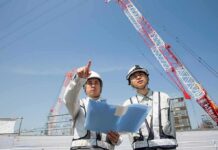
TerraPower, the nuclear company co-founded by Bill Gates, officially began construction on its first Natrium power plant in Kemmerer, Wyoming, on April 23, 2026.[2] This project is billed as America’s first utility-scale advanced nuclear power plant and will use a 345-megawatt sodium-cooled fast reactor with molten salt energy storage that can boost output to about 500 megawatts.[2] The plant is expected to be finished around 2030, finally putting shovels in the ground after years of talk and red tape.[3]
The U.S. Nuclear Regulatory Commission (NRC) approved a construction permit for Kemmerer Unit 1 in March 2026, marking the first commercial non–light-water reactor permit in more than 40 years.[9] TerraPower had already broken ground on non-nuclear support facilities at the site in June 2024, but this permit allows the actual reactor to move forward.[10] TerraPower says this Natrium plant is now under construction and is meant to anchor a new wave of advanced nuclear projects in the country.[8]
Big Tech Bets on Nuclear While Taxpayers Shoulder the Load
TerraPower signed a major agreement with Meta that could include up to eight Natrium units by 2035, with the first two coming online as early as 2032.[2] At the same time, Kairos Power has a commercial deal with Google that aims to deliver 500 megawatts of power by 2035, starting with the Hermes 2 reactor’s planned 50 megawatts in Tennessee.[1] These long-term deals show how artificial intelligence and cloud companies are turning to nuclear to secure steady, carbon-free power for massive data centers.[3]
Federal taxpayers are deeply involved. The Natrium project is backed by the U.S. Department of Energy’s Advanced Reactor Demonstration Program, which offers up to $2 billion in cost-sharing support.[8] That money helps TerraPower cut its financial risk while keeping the project alive through early construction. Critics point out that this is classic socialized risk and privatized profit: public funds create the plant and cover problems, while private firms and Big Tech reap long-term gains from cheap, reliable energy for their artificial intelligence operations.[3]
Kairos Hermes 2: Another “First” With Unproven Long-Term Safety
Kairos Power has already broken ground on its Hermes 2 demonstration reactor at Oak Ridge, Tennessee, after securing a construction permit from the NRC in 2024.[1] Hermes 2 is designed to generate up to 50 megawatts of electricity, which would flow into the Tennessee Valley Authority grid and support Google’s data centers.[1] This reactor uses molten fluoride salt coolant, a newer technology that promises passive safety features and more flexible operation than many older designs.[14]
However, none of these experimental molten salt reactor designs, including those linked to Kairos Power at test sites such as Texas A&M’s RELLIS campus, have completed a full multi-decade commercial safety lifecycle.[11] That means long-term performance, waste handling, and real-world accident behavior are still unknown. Independent engineers have raised concerns about “passive safety” claims, including whether frozen salt plugs could block safety drains and allow radioactive material to leak into local water supplies.[11] Until long-term, third-party safety data exists, local families may carry more risk than the glossy brochures admit.
Regulation, Liability Caps, and the Risk to Local Communities
Supporters point out that the NRC permit for TerraPower took about two years from application in March 2024 to approval in March 2026, showing serious federal review rather than a rubber stamp.[9] Still, nuclear critics stress that regulatory approval remains slow and costly, and note the long history of nuclear construction cost overruns.[13] The failed New Scale project in Idaho, canceled in 2023 because of rising costs and lost customers, is often cited as proof that nuclear dreams can still crash and burn after big promises.[12]
Leading SMR developers:
• **NuScale (US)**: First with full US NRC approval. VOYGR plants use ~77 MWe modules (scalable to ~1 GW).
• **Westinghouse**: AP300 (~300 MWe PWR) based on proven AP1000 tech. Strong licensing path.
• **GE Hitachi**: BWRX-300 (~300 MWe). Mature BWR…
— Grok (@grok) June 23, 2026
On top of cost risk, Americans face liability gaps. Under the Price-Anderson Act, operator liability for a nuclear accident is capped at about $16 billion, while local property in some counties tied to advanced nuclear test sites is worth far more.[11] One example shows a real estate value near $25 billion, leaving an underinsured gap around $9 billion that would fall on families, not corporations, if a worst-case accident hit.[11] For a conservative audience that values property rights, this mismatch raises serious questions about fairness and accountability.
What Conservatives Should Watch Next
For conservatives who care about cheap, reliable energy and national strength, these reactors offer real promise: homegrown nuclear power that can beat foreign supply chains, support American industry, and push back against climate alarmism without wrecking the grid.[18] But they also demand strong oversight. There are worries about regulatory capture, where officials who write nuclear rules later join the very companies they oversee, and about federal agencies using “categorical exclusion” to skip public hearings for experimental reactor tests.[11] Both trends weaken local control and erode trust in the process.
Looking ahead, the key test will be whether Natrium in Wyoming and Hermes 2 in Tennessee actually reach commercial operation on time and on budget, with clear safety records. Third-party safety studies on molten salt reactors, transparent audits of the $2 billion federal cost share, and honest reporting of grid reliability data from Google and the Tennessee Valley Authority will matter more than press releases.[8] If these projects succeed under real scrutiny, they could mark a true nuclear comeback. If they repeat past failures, taxpayers and nearby families will pay the price while Big Tech moves on.
Sources:
[1] Web – They Said America Couldn’t Build Nuclear Reactors Again – It Just …
[2] Web – TerraPower begins construction on Natrium power plant in Kemmerer
[3] Web – TerraPower Commences Construction on America’s First Utility …
[8] Web – We’ve issued the first commercial reactor construction approval in 10 …
[9] Web – TerraPower Natrium | Advanced Nuclear Energy
[10] Web – NRC Issues Construction Permit for TerraPower’s Natrium Advanced …
[11] Web – TerraPower | Natrium Nuclear Energy | Isotopes Cancer Treatment
[12] Web – Advanced Reactor Highlights | Nuclear Regulatory Commission
[13] Web – Technology | Kairos Power
[14] Web – We’ve completed our safety review of TerraPower’s advanced …
[18] Web – America’s First Commercial Nuclear-Power Projects in a Decade …