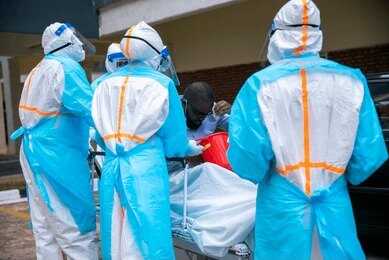
As dozens die in a Congo displacement camp with almost no clean water or toilets, officials argue over test results while the poorest people on earth pay the price.
Story Snapshot
- At least 30 people have died in one Congo camp in weeks, with Ebola-like symptoms but no confirmed cause yet.
- Deaths are hitting an overcrowded camp of 15,000 displaced people who lack basic sanitation and hygiene.
- Aid groups say foreign funding cuts for water and toilets, including from the United States, left these families exposed.
- Officials focus on lab confirmation while ordinary people see a familiar pattern of delay, denial, and abandonment.
What Is Happening Inside Kigonze Camp?
Camp leaders in Kigonze, a displacement camp near Bunia in eastern Congo, report that at least 30 people have died since early May, far above the usual one to three deaths per month.[12] Witnesses say the dead suffered headaches, fever, and vomiting, symptoms that fit Ebola but also other diseases like cholera or malaria.[12] Families refused testing on both the living and the dead until June 18, so health workers only recently collected samples from five victims and are still waiting for lab results.[12]
The camp holds more than 15,000 people who fled years of war and chaos in eastern Congo.[12] Residents crowd into flimsy shelters, share few toilets, and often line up at dry taps or broken water points.[12] Aid workers warn that if Ebola or any severe infection is moving through a place like this, it can spread quietly and fast because people are packed together and basic infection control is almost impossible.[7] Those conditions turn one local health scare into a regional risk for millions of displaced people.
Why The Cause Of Deaths Is Still Unclear
International health rules require laboratory confirmation before officials can declare Ebola, so authorities still label these as “suspected” cases.[8] That caution makes sense scientifically, since fever, headache, and vomiting are common in other infections, yet it clashes with what people in the camp see every day: more funerals, more fresh graves, and no clear answers.[12] Residents’ fear and mistrust led many families to block testing at first, slowing the search for the real cause and deepening suspicion on all sides.[12]
This standoff is not new. Past Ebola crises in central and West Africa also saw angry communities chase out health teams and seize bodies for traditional burials.[18] People who already feel ignored by their own government and by foreign powers often assume new health rules are just another way outsiders control them. At Kigonze, that history means the line between reasonable caution and deadly delay is very thin, and ordinary families are stuck in the middle while officials argue over language and lab forms.
How Cuts To Basic Services Made A Bad Situation Worse
Four aid groups working in eastern Congo say these deaths did not come out of nowhere; they link them to a collapse in funding for water, sanitation, and hygiene projects serving displaced people.[12] United Nations data show money for toilets and handwashing stations in Congo was cut by more than half between 2024 and 2025, dropping to about $38 million, while this year’s $80 million appeal is barely one-fifth funded.[6] Washington had been the main backer of these services, giving over $60 million in 2024, but United States–funded projects were scaled back or shut down after later cuts.[6]
In real life, those numbers mean human beings are now using overflowing latrines that fill up so quickly people end up emptying them with their bare hands.[6] One aid group says it went from running 82 taps and more than 400 public toilets for over 125,000 people to just six taps and no public toilets for fewer than 19,000 people.[6] In that environment, every policy fight in Washington or Brussels turns into a direct hit on some of the poorest families in the world, making it easier for any disease, Ebola or otherwise, to explode unchecked.
Global Outbreak, Local Distrust, And U.S. Voters
The wider Ebola emergency in Congo and Uganda is driven by the Bundibugyo strain, a rare form of the virus with no licensed vaccine and only basic supportive care available.[8] The United States Centers for Disease Control and Prevention (CDC) reports hundreds of confirmed cases and more than two hundred deaths so far, and warns the true number is likely higher due to insecurity and weak surveillance.[8] Armed groups, bad roads, and deep distrust of officials all limit contact tracing and testing, making camps like Kigonze blind spots where the virus can move for weeks before anyone notices.[17]
146) An unprecedented increase of at least 30 deaths since May 2026 at the Kigonze displacement camp in Bunia home to 15,000 people & which normally reports 1-3 deaths/ month has raised alarms that #Ebola is spreading rapidly through vulnerable communities in #DRC ctd) pic.twitter.com/8xTsnkEWuC
— R P Shah Memorial Trust for Kids & Global Health (@Rpshahmemorial1) June 20, 2026
For many Americans across the political spectrum, the Kigonze story sounds like a familiar script. Global agencies talk about “risk assessments” and “appeal gaps” while mothers in dirt-floor tents cannot get soap, running water, or a safe toilet. Donor governments boast about emergency packages but quietly cut the cheap, unglamorous work that keeps sewage out of drinking water. Whether you blame “America First” pullbacks or decades of waste in foreign aid, the result is the same: regular people, not elites, absorb the shock when the next outbreak hits.
Sources:
[6] Web – At least 30 people have died since May in the Kigonze displacement …
[7] Web – At least 30 deaths at Congo camp show Ebola could be spreading fast
[12] Web – At least 30 deaths at Congo camp show Ebola could be spreading fast
[17] Web – 5 displacement patterns emerging from the Ebola epidemic – Liberia
[18] Web – In Congo displacement camp, fighting Ebola with sand … – AP News