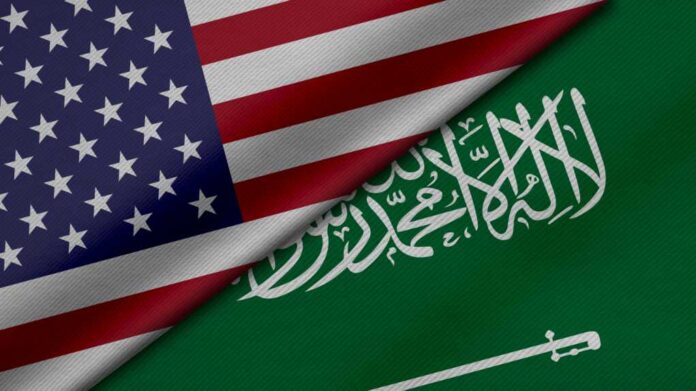
Saudi Arabia’s ambitious push into civil nuclear energy is set to proceed with a Joint Declaration on Cooperation finalized by the U.S. and the Trump administration. This historic agreement not only positions American companies for lucrative, multi-billion-dollar contracts but also mandates rigorous nonproliferation safeguards, setting a new global standard. While the deal promises to strengthen U.S. influence in the Middle East and counter Russian and Chinese encroachment, the final Section 123 Agreement will face essential review by Congress to ensure the protection of American interests and constitutional oversight.
Story Highlights
- The Trump administration finalized a Joint Declaration on Civil Nuclear Energy Cooperation with Saudi Arabia, advancing U.S. influence and industry interests.
- The agreement mandates strict nonproliferation safeguards, distinguishing it from deals offered by Russia and China.
- Congress will review a Section 123 Agreement before U.S. nuclear exports to Saudi Arabia commence.
- The deal positions U.S. firms to secure lucrative contracts, potentially strengthening national security and economic growth.
Historic Shift in U.S.-Saudi Nuclear Relations
On November 19, 2025, the Trump administration announced the completion of negotiations for a Joint Declaration on Civil Nuclear Energy Cooperation with Saudi Arabia. This historic move follows years of intermittent talks and marks a decisive pivot away from the previous administration’s indecision and globalist hesitancy. President Trump’s Executive Order 14299, signed in May 2024, prioritized advancing American nuclear exports and directed the State Department to negotiate new agreements, restoring U.S. leadership in global energy markets. The declaration lays the legal groundwork for a Section 123 Agreement, which Congress must approve before any nuclear exports proceed, ensuring that constitutional checks remain in place.
Saudi Arabia and the United States have signed a joint declaration on civil nuclear energy that “builds the legal foundation for a decades-long, multi-billion-dollar nuclear energy partnership,” the White House announces in a statement. pic.twitter.com/gJgTykqSr4
— Al Arabiya English (@AlArabiya_Eng) November 19, 2025
Nonproliferation Safeguards: A Victory for American Standards
Unlike the leniency shown by Russia and China in their international nuclear deals, the U.S.-Saudi agreement requires Saudi Arabia to accept vigorous nonproliferation safeguards and transparency measures. These stipulations set a new global benchmark, making it harder for adversarial powers to exploit loopholes or encourage proliferation. The International Atomic Energy Agency (IAEA) will play a key role in verifying compliance and ensuring that nuclear materials are used exclusively for peaceful purposes. This approach protects U.S. national security interests and upholds conservative values of American oversight and accountability, offering a stark contrast to the riskier, opaque alternatives promoted by foreign competitors.
Economic and Strategic Impact for the U.S.
The agreement opens the door for American companies such as Westinghouse Electric and General Electric to compete for multi-billion-dollar contracts in Saudi Arabia’s ambitious nuclear energy program. By enabling U.S. firms to export technology, equipment, and expertise, the deal promises job creation, economic growth, and a resurgence of American industrial might. The partnership also strengthens U.S. influence in the Middle East, countering growing Russian and Chinese encroachment and ensuring that American values drive regional energy development. Saudi Arabia’s push to diversify its energy mix—reducing dependence on oil—aligns with U.S. interests in stabilizing global energy markets and promoting reliable allies.
Congressional Review: Preserving Constitutional Oversight
Although the Joint Declaration signals progress, the final Section 123 Agreement is still being drafted and will soon be reviewed by Congress. This step is essential to preserving American sovereignty and ensuring that any transfer of nuclear technology serves the nation’s strategic and security goals. Lawmakers retain the right to scrutinize the deal and block problematic provisions, protecting against government overreach and foreign influence. The conservative base should remain vigilant, demanding transparency and accountability to prevent any erosion of U.S. constitutional principles or national interests in future negotiations.
Specialist Perspectives and Regional Implications
Industry specialists and nonproliferation analysts widely support the agreement’s rigorous safeguards, noting that a U.S.-led partnership offers superior transparency and security compared to alternatives with Russia or China. Jennifer from the Atlantic Council highlights that American involvement can prevent the misuse of nuclear technology and reinforce stability in the region. The Breakthrough Institute stresses that stringent oversight will produce a more transparent program, benefiting both American industry and global security. While critics warn of potential environmental risks, most analysts agree that the deal sets a high standard for future nuclear cooperation, encouraging responsible energy diversification across the Middle East.
Watch the report: FULL | Trump Announces US–Saudi Deal on Nuclear Energy, Rare Metals & Artificial Intelligence | APT
Sources:
What The U.S.-Saudi Nuclear Deal Means… | The Breakthrough Institute
U.S. Energy Secretary and Saudi Arabia’s Energy Minister Announce Deal on Civil Nuclear Cooperation
Fact Sheet: President Donald J. Trump Solidifies Economic and Defense Partnership with the Kingdom of Saudi Arabia
What The U.S.-Saudi Nuclear Deal Means… | The Breakthrough Institute
US Reaches Initial Deal With Saudi Arabia on Nuclear Sharing – Bloomberg