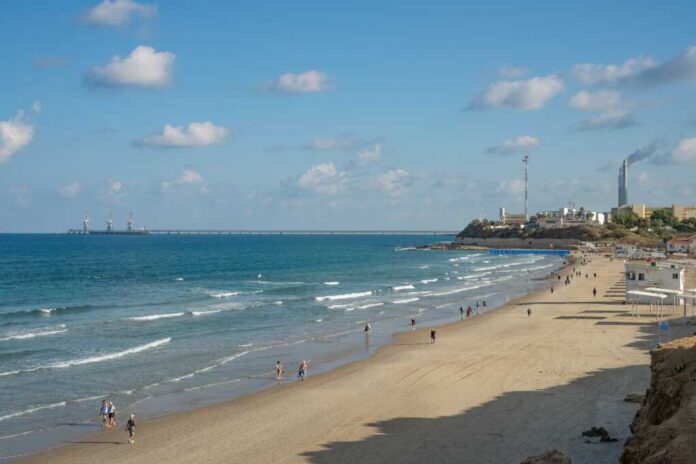
A fatal shark attack off the coast of Hadera, Israel, in April 2024 has led to renewed scrutiny of tourism practices and environmental factors influencing marine ecosystems. The incident involved a 40-year-old tourist and dusky sharks, a species not previously associated with fatal human attacks.
Story Highlights
- A tourist snorkeling near Hadera, Israel, was killed by dusky sharks in April 2024.
- This marks the first documented fatal attack by dusky sharks, a species generally considered harmless to humans.
- Scientists suggest altered shark behavior, potentially influenced by tourism operators feeding sharks and warmer waters from power plants, contributed to the incident.
- The event has prompted experts to advocate for immediate regulatory changes regarding shark feeding and waste disposal.
In April 2024, a tourist was attacked and killed by a group of dusky sharks approximately 100 meters off Hadera’s coast while snorkeling and filming. Rescue efforts were unsuccessful, with only partial remains recovered. The peer-reviewed journal Ethology documented this event, noting the absence of prior fatal attacks by dusky sharks on humans. Researchers indicate that the circumstances suggest a feeding frenzy rather than natural predatory behavior, attributing it to human-induced conditions.
Dad of 4 killed by sharks off Israel was attacked by species believed to be harmless https://t.co/1fHxwsmZGR pic.twitter.com/t0cyxHCWik
— New York Post (@nypost) October 22, 2025
Marine biologists investigating the incident identified changes in the local shark population’s behavior. The waters near Hadera have become a seasonal aggregation point for dusky and sandbar sharks, drawn by artificially warmed water discharged from industrial facilities. Tourism operators have reportedly capitalized on this by feeding sharks to ensure sightings for customers. This practice is believed to have conditioned the sharks to associate humans with food, altering their natural instincts. The presence of food waste in the area may have further reinforced these behaviors, leading to what researchers describe as a “begging” behavior previously unobserved in this species.
Concerns have been raised regarding the regulation of tourism operations by Israeli authorities and environmental agencies. Local boat operators reportedly continued feeding wild sharks despite potential public safety risks. Scientists and authorities are noted to have had limited regulatory authority over these tourism activities, even as evidence of hazardous conditions emerged. Public safety information and risk management, typically provided by government agencies, did not prevent these shark-feeding operations from continuing. This regulatory oversight has been cited as a factor where commercial interests may have superseded safety measures.
The incident has prompted discussions on environmental stewardship and human-wildlife interactions. Conservation experts contend that feeding wild sharks disrupts natural behaviors and increases risks to human safety. Conversely, tourism advocates have emphasized the statistical rarity of such attacks. Scientific analysis in Ethology suggests that competition for food, particularly when animals are conditioned to associate humans with food, can override a species’ typical avoidance of humans.
The warm water discharges from industrial facilities have transformed Hadera’s coastline into an artificial shark aggregation site, concentrating predators in areas frequented by tourists and swimmers. This environmental alteration, combined with intentional feeding practices, is believed to have created conditions not naturally occurring. The resulting ecosystem is seen as operating under human-created rules that may facilitate dangerous wildlife encounters. Long-term behavioral changes in local shark populations are now considered a potential threat to both marine ecosystems and human safety, with learned behaviors that could persist even if feeding practices cease.
Forensic evidence and scientific analysis support the conclusion that when predators are conditioned to expect food from humans, tragic outcomes can occur. The impact of the attack extends to the victim’s family, local tourism operators facing reputational damage, the broader tourist community, and the marine ecosystem. Economic pressures from potential tourism declines may influence authorities to implement regulations. The incident has contributed to global discussions on best practices for wildlife tourism, with experts advocating for new guidelines on interacting with marine predators.
Watch the report: Deadly Feeding Frenzy: “Harmless” Sharks Kill Snorkeler in Israel
Sources:
Sharks from species once thought harmless kill and eat snorkeler in feeding frenzy – The Independent
Dad of 4 killed by sharks off Israel was attacked by species believed to be harmless
Scientists issue shark warning after fatal attack by shy species | The Independent
Fatal attack on a human by dusky sharks during a feeding frenzy event – Ethology