A midday drone strike tore through a crowded border-market and fuel area in Abyei, killing well over 100 people and igniting fires that burned into the next day.
Story Snapshot
- A strike hit Amiet Market near Abyei, with officials reporting at least 150 dead as fires spread.
- A named Abyei official blamed Sudan’s army for the attack; South Sudan lodged a formal protest.
- Reports describe a daytime blast at the market and fuel area about 10 kilometers north of Abyei town.
- Independent outlets confirmed mass casualties and the fire’s aftermath while noting no public response from Sudan by deadline.
What Happened at Amiet Market
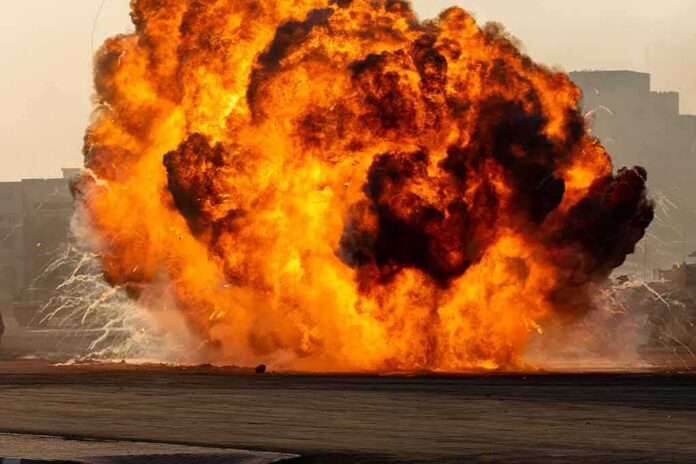
Local authorities said a drone struck Amiet Market late morning on October 19. The blast hit a busy trading area and a nearby fuel site about 10 kilometers north of Abyei town. Fires spread after the strike and continued into the next day, making rescue work dangerous. Reported deaths rose fast as crews reached more victims, with counts moving from dozens to over 150 as recovery continued.
The scene aligns across several accounts. Radio Tamazuj cited the 11:30 a.m. timing at the common market. Reuters sources, carried by Business Day, described a hit on a fuel depot within the market zone. The Associated Press reported a death toll of at least 153 from the caretaker information minister and described an active fire on day two. Together, these details build a consistent picture of a daytime strike followed by fires that worsened the toll.
Who Is Being Blamed and Why It Matters
A named Abyei caretaker information minister, Yohanna Akol Ngor, publicly accused Sudan’s army of carrying out the drone strike. He repeated the blame as the death toll rose, showing the claim was not a one-off remark. South Sudan’s Foreign Ministry then summoned Sudan’s ambassador and lodged a formal protest citing the Sudanese Armed Forces. That step carried the accusation into the diplomatic arena between Juba and Khartoum.
Major outlets underscored the severity of the attack and the scale of loss. The Associated Press reported the minister’s accusation and the casualty count, and it described the continuing fires. By press time, Sudan’s government or army had not issued a public response in those reports. That silence left the public hearing a single, named-source attribution alongside images of mass death and destruction at the market.
Why Abyei’s Location Raises the Stakes
Abyei sits on the hotly disputed line between Sudan and South Sudan. The region’s final status has remained unresolved since South Sudan’s independence. The United Nations created a peacekeeping mission there in 2011 to reduce violence and keep space for talks, but political progress has remained slow. That unresolved status makes every clash riskier. Strikes near that line can pull both countries into deeper crisis and widen a war already straining the region.
A drone strike on a market in Abyei, a border region disputed by #Sudan and #SouthSudan, hit a fuel depot, killing at least 153 people.
Yohanna Akol Ngor, the Abyei administration’s caretaker information minister, blamed Sudan’s military for Monday’s attack on Amiet Market— claudio tecchio (@DossierTibet) October 21, 2026
Sudan’s wider war has featured more drones on both sides of the front lines. Reports around this incident fit that broader pattern. Drones strike crowded areas and key supplies, such as fuel, to sap local economies and morale. When a drone hits a market, civilians pay the price first and worst. That is why this attack drew immediate diplomatic action from South Sudan and sharp attention from international media and observers.
How This Connects to U.S. Readers
American taxpayers have funded aid for crises like Sudan’s for years, yet mass-casualty strikes keep happening. People on the left and right see a pattern: distant wars grow, civilians are trapped, and big governments and global bodies struggle to prevent the worst. This strike is another warning. When disputes freeze and borders stay murky, armed groups exploit the gray zone. Civilians then bear the cost while officials trade statements and the fires keep burning.
Sources:
youtube.com, latimes.com, radiotamazuj.org, apnews.com, businessday.co.za, anewz.tv, news.un.org, kansascity.com, thesudantimes.com