A viral video showing two Jewish women pushed out of a Spanish spa after staff reportedly noticed a Star of David has reignited fears that institutions are policing identity instead of protecting basic rights.
Story Snapshot
- Reports say staff removed Jewish visitors after bystanders reacted to visible symbols, including a Star of David and an Israeli flag [3].
- A pro-Israel legal group announced action after the clip spread online, intensifying scrutiny of the institution’s conduct [5].
- Spanish outlets say the institution opened an inquiry as officials faced questions about whether symbols triggered the removal [11].
- The episode mirrors recurring disputes where security responses appear to target identity rather than behavior [11].
What the video and reports show
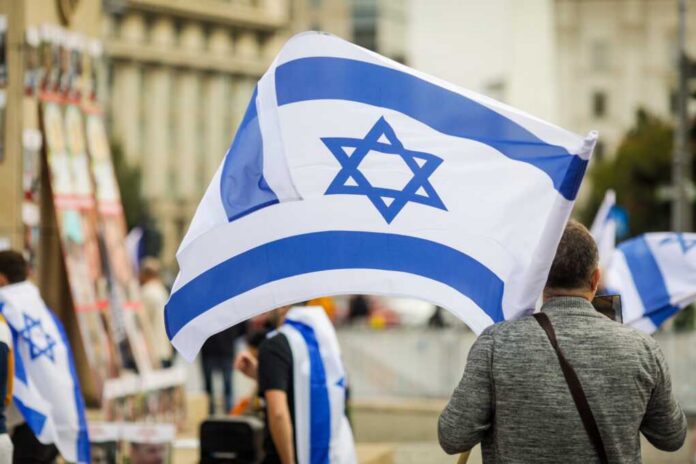
Contemporaneous coverage describes a video in which a security guard orders Jewish visitors to leave after others react to visible Jewish symbols, including a Star of David necklace and a small Israeli flag [5]. Reporting from Israel-based and diaspora outlets states the visitors were escorted out following insults from bystanders who objected to the symbols [3]. The available accounts emphasize the sequence: symbols were seen, crowd complaints escalated, and staff directed removal. None of the cited coverage includes a full institutional incident report.
Journalistic summaries consistently tie the removal to the display of Jewish or Israeli markers. The Jerusalem Post reports the women “were wearing Stars of David and carrying an Israeli flag” and were expelled after hostility from other visitors [3]. The American Israelite, citing Jewish Telegraphic Agency material, says legal advocacy began after the video spread and “appears to show” a security guard telling the women to leave once staff noticed the symbols [5]. These accounts hinge on the same causal chain but rely on video snippets and witness statements rather than complete, released records.
Institutional response and unanswered questions
Spanish coverage says the institution opened an internal investigation after the clip circulated, signaling acknowledgement that procedures and decision-making require review [11]. The reporting does not include a detailed public explanation from staff specifying whether rules about banners, disruption, or safety guided the decision, or whether visible religious or national symbols were the core trigger. Without a released incident log, body camera footage, or a formal statement addressing causality, the exact rationale remains partially undocumented in the public domain [11].
Legal and advocacy groups reportedly began pursuing action, arguing the removal penalized identity instead of misconduct [5]. Their stated aim is to test whether staff applied viewpoint-neutral policies or yielded to heckler pressure. That legal framing highlights a recurring dilemma for cultural venues: when crowds object to symbols, managers face a choice between quieting the crowd or removing the targeted individuals. The investigative outcome—if publicly disclosed—will clarify whether policy, training, or crowd-control protocols need revision to avoid identity-based penalties [11].
Why this story resonates across political lines
Across the American spectrum, people see a pattern: when institutions fear controversy, they sometimes displace risk by removing the targeted party rather than confronting the source of harassment. Reports here echo similar cases in museums and campuses where visible Jewish or Israeli symbols became flashpoints, crowd reactions intensified, and staff interventions appeared to land hardest on those displaying protected identity markers [3]. That sequence feeds a public belief—on right and left—that elites prioritize liability management over equal treatment and free expression [11].
For conservatives skeptical of speech codes and for liberals alarmed by minority discrimination, the central concern overlaps: rules must protect safety without punishing identity. Clear policies applied evenly to all symbols and all crowds can prevent a “heckler’s veto.” Transparent incident records, staff training on de-escalation that shields targeted individuals, and prompt public reporting after reviews can rebuild trust. If the inquiry confirms symbol-triggered removal, corrective measures will be essential to deter repeat episodes [11].
What to watch next
Watch for three developments. First, an official statement detailing the specific policy basis for removal, including whether any neutral rule—such as display size, disruption, or signage—was invoked [11]. Second, release of fuller footage or documentation that validates or refutes the claim that staff acted because of Jewish identity or symbols [5]. Third, any remedial steps—policy updates, staff training, or disciplinary actions—signaling whether leadership intends to prevent identity-based removals when crowds object to protected expression [11].
Sources:
[3] Web – Jewish Women Forced Out of Madrid’s Reina Sofía Museum – JFeed
[5] Web – Jewish Women Expelled From Madrid Museum After Antisemitic …
[11] Web – Israeli tourists expelled from Madrid museum after being called …