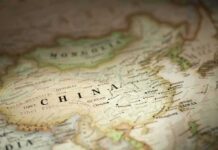
China’s push for AI self-sufficiency is intensifying its competition with U.S. dominance in technology, reshaping global standards and industrial strategy.
At a Glance
- China is accelerating efforts toward AI self-reliance amid U.S. export restrictions, promoting domestic chip production and AI infrastructure.
- Chinese tech firms like Cambricon and Alibaba are landing breakthroughs in chip design and AI models to rival U.S. dominance.
- State-led coordination—through regulation, funding, and planning—is reshaping China’s AI landscape to be strategically independent.
China’s State-Driven AI Self-Sufficiency
China’s leadership has launched a deliberate strategy to reduce dependence on U.S. technology, especially in semiconductors and AI systems. Major players like Huawei, Alibaba, and Cambricon are receiving robust support in the form of national guidance, subsidies, and industry planning. For instance, Cambricon has rebounded from past setbacks to post strong profits in early 2025 and is projected to grow its market share substantially by 2028.
Watch now: China will come ‘very close’ to achieving AI self-sufficiency in next 5 years: UBS GWM
Efforts go beyond hardware: China’s “Project Spare Tire” illustrates the depth of state ambition, aiming for chip self-sufficiency of 70 percent by 2028, backed by preferential funding, regulatory incentives, and a surge in AI education programs. At the provincial level, authorities are also pushing firms to source more than half their chips domestically, further entrenching the shift away from foreign dependence.
Disrupting Global AI Dominance
This state-backed push is yielding tangible results. Chinese firms like DeepSeek and Cambricon are delivering competitive AI models and chips despite U.S. sanctions. DeepSeek’s R1 model, featuring cost efficiency and open infrastructure, has challenged perceptions of U.S. AI superiority. Analysts are increasingly viewing China’s pragmatic, mass-application focus as a potential long-term strength over the U.S.’s research-oriented, speculative AGI ambitions.
China isn’t just innovating in isolated pockets—it is institutionalizing its AI ecosystem. Regulatory control is being applied to “prevent disorderly competition,” ensuring coherent deployment across industries and avoiding investment duplication.
Global Implications and Strategic Stakes
China’s AI self-sufficiency drive has broader geopolitical implications. It introduces pathways for alternative governance models, with Chinese firms promoting interoperability and open standards as counterpoints to U.S. system norms. For U.S. policymakers, the rise of a bifurcated global AI ecosystem signals a strategic imperative to recalibrate investment, regulation, and international partnerships.
Sources