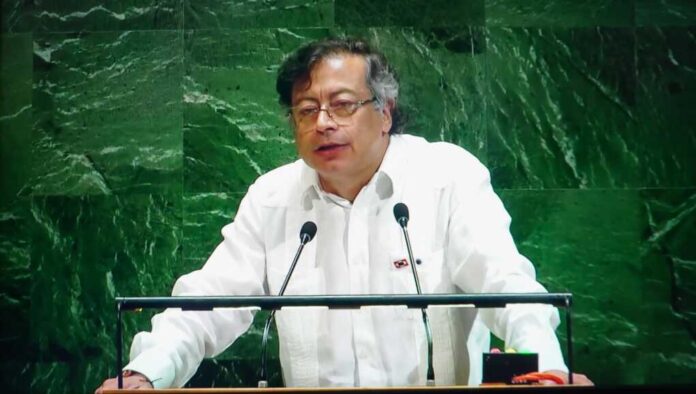
A new, rapidly escalating diplomatic crisis threatens Colombian sovereignty, raising alarms among allies and critics alike after U.S. President Donald Trump unexpectedly raised the prospect of military intervention. The situation has seen a dramatic swing from U.S. threats of military action—which prompted mass protests in Bogotá led by Colombian President Gustavo Petro—to a sudden invitation for a White House meeting, underscoring the volatile nature of the current administration’s foreign policy and the weaponization of drug war narratives against a key regional partner.
Story Highlights
- Trump’s rhetoric hints at military intervention in Colombia, sparking regional tension.
- Colombian President Petro warns of a “real threat” from the U.S., leading to mass protests.
- Despite threats, Trump extends an invitation to Petro for a White House meeting.
- Concerns grow over the weaponization of drug war narratives against Colombia.
U.S. Rhetoric Escalates Tensions with Colombia
In an unexpected turn of events, U.S. President Donald Trump has raised the prospect of military intervention in Colombia. This escalation follows a U.S. military operation in Venezuela that ousted Nicolás Maduro, with Trump accusing Colombian President Gustavo Petro of being deeply involved in cocaine production. Trump’s remarks, including calling Colombia “very sick,” have set off alarms in Bogotá and among international observers.
Colombian President Petro has responded by mobilizing mass protests, framing the U.S. rhetoric as a genuine threat to Colombian sovereignty. Petro’s warnings were delivered during an interview with the BBC, where he emphasized the risk of military action. The situation underscores a potential shift in Colombia’s relationship with the United States, historically a key ally in the region.
Colombia is on high alert and taking Trump’s comments about possible US intervention in the region very seriously.
🔴 LIVE updates: https://t.co/kgv0F6yWQi pic.twitter.com/q2elFu2PD0
— Al Jazeera English (@AJEnglish) January 6, 2026
From Threats to Diplomacy: A Rapid Shift
Amid rising tensions, President Trump has shifted his tone, following a one-hour conversation with President Petro. Describing the call as a “Great Honor,” Trump extended an invitation for a White House meeting. This move temporarily cools the crisis, but Petro’s caution about ongoing U.S. coercive actions remains. The rapid swing from threats to diplomacy highlights the volatility in U.S. decision-making and the unpredictable nature of the current administration’s foreign policy.
The diplomatic crisis, while momentarily eased, underscores the broader implications of using drug war narratives as a political tool. Petro’s government, which has sought to reorient drug policy towards decriminalization and rural development, faces pressure from U.S. sanctions and allegations linking it to drug trafficking. This situation could redefine U.S.-Colombia relations and challenge long-standing security partnerships.
Implications for Regional Stability
The potential for U.S. military intervention in Colombia, a country that has traditionally been a staunch ally, has sent shockwaves across Latin America. Regional governments, recalling past U.S. interventions, view the rhetoric as a possible expansion of interventionist precedent. The situation also raises critical questions about the limits of militarized drug policy and its impact on sovereignty norms in the region.
As the situation unfolds, the international community watches closely, understanding that the resolution of this crisis could set significant precedents for U.S. engagement in Latin America. The upcoming meeting between Trump and Petro will be pivotal in determining the future trajectory of U.S.-Colombia relations.
Watch the report: Colombians protest Trump’s threats of military action
Sources:
- Trump Invites Colombian President to White House After Threatening His Country with Military Strike
- Diplomatic Developments: Trump Invites Colombia’s President Amid Rising Tensions
- Trump floats action against Colombia, Cuba, Mexico, Iran and Greenland
- Donald Trump Invites Colombian President Gustavo Petro to White House Amid Tensions and Diplomatic Strain