As one of the strongest storms on the planet barrels toward Taiwan, millions are about to learn how much help they can really expect when nature hits harder than government planning.
Story Snapshot
- Super Typhoon Bavi has already smashed U.S. islands with Category 5 winds and record rain, and now its path points toward Taiwan.
- Rota and Guam saw “catastrophic” winds, flash floods, and power outages, exposing how fragile island infrastructure is when extreme weather strikes.
- Taiwan’s dense cities, key tech factories, and aging coastal housing face serious risk if Bavi keeps its current strength.
- Debates over climate change, disaster aid, and government priorities are turning this storm into another test of trust in global and U.S. leadership.
From Rota’s “Catastrophic” Winds To Taiwan’s Looming Test
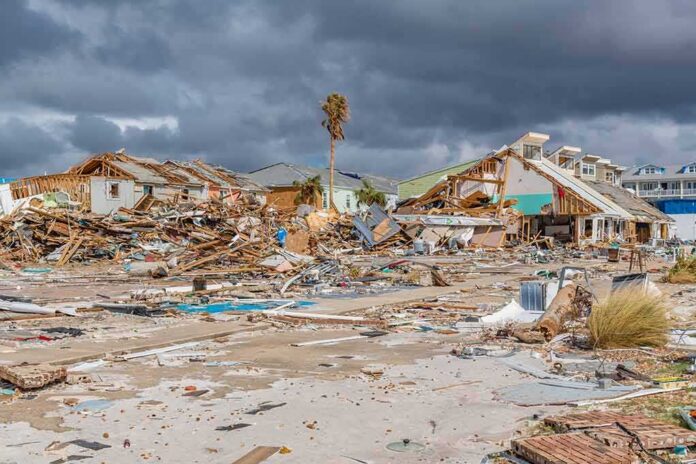
Super Typhoon Bavi already proved its power when the eye passed over the small U.S. island of Rota with winds over 150 miles per hour, equal to a Category 5 hurricane. The National Weather Service warned that Bavi could reach 180 mile per hour sustained winds with gusts up to 215 miles per hour, calling it an “imminent danger to life.” That same storm system is now tracking west toward Taiwan, carrying huge amounts of rain and the same extreme wind field that overwhelmed much smaller islands.
On Rota, local officials reported “major damages,” while poor cell service and fallen towers made it hard to even measure how bad things were in real time. Guam saw flash floods, flipped cars, and streets that became impassable after more than a foot of rain in a day, with one report clocking 12.64 inches and setting a daily record. Emergency managers spoke of a “miracle” that no one was killed on Rota, despite warnings that much of the island could become uninhabitable for weeks if the storm stayed at peak strength.
Why Taiwan’s Risk Is Bigger And More Complicated
The same storm that hit islands of a few thousand people is now aiming at Taiwan, home to more than twenty million residents, crowded coastal cities, and key technology factories that feed the global economy. Unlike Rota, Taiwan has more concrete buildings and stronger codes in some areas, but it also has many older apartments, hillside homes, and low-lying industrial zones that flood easily. If Bavi brings anything close to the forecast twenty inches of rain seen in earlier warnings, landslides, blackouts, and long supply chain breaks are realistic risks.
For regular families in Taiwan, the stakes look familiar to Americans watching from afar: people are being told to trust that local and national leaders will secure food, water, medical care, and power when the storm hits, even as past disasters have often shown delays, confusion, and finger-pointing. Many residents still remember other powerful storms where rebuilding dragged on while politicians argued over budgets and climate talking points. That history feeds a growing sense, on both the left and right, that when nature pushes systems to the edge, leaders focus more on press conferences than on fixing weak roads, drainage, and housing before the next hit.
Storm Science, Climate Politics, And The “Deep State” Debate
Scientists tie Bavi’s strength to very warm ocean waters and a strong El Niño pattern, noting that June sea temperatures hit record highs worldwide. That research adds weight to claims that stronger, wetter storms are becoming more common, especially in the western Pacific where island communities have fewer escape options. At the same time, every new monster typhoon fuels bitter fights over climate policy, energy costs, and who pays for rebuilding, with many Americans feeling stuck between expensive global plans and local systems that still fail when the wind starts to rise.
Our disaster teams are on the ground and ready to help after Super Typhoon Bavi made landfall in the Northern Mariana Islands, where communities are still picking up the pieces from Typhoon Sinlaku just three months ago.
Bavi was the strongest storm to ever hit the island of… pic.twitter.com/ErLl8BcwBD
— American Red Cross (@RedCross) July 7, 2026
Media coverage of Bavi has focused on dramatic video, “catastrophic wind” warnings, and climate links, but there is still no full engineering report on exactly how many structures failed on Rota and Guam or which building types held up best. That gap matters as Taiwan braces for impact, because people want more than fear and political slogans; they want proof that lessons are learned and applied. When citizens watch one of the world’s strongest storms slam U.S. territories and then aim at another democracy, the shared question from right and left is simple: if leaders know these risks, why are critical communities and power grids still this easy to break?
Sources:
youtube.com, aljazeera.com, nytimes.com, euronews.com, weather.com