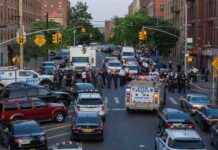
A Midtown Manhattan high-rise came close enough to collapse to clear whole city blocks, and now officials insist emergency fixes will be enough to keep it standing.
Story Snapshot
- A 38-story Midtown Manhattan high-rise under conversion was evacuated after interior columns buckled and floors sagged, but no injuries were reported.
- City officials say contractors are now allowed to begin stabilizing the structure with temporary supports and new steel.
- The building had a long record of complaints and prior violations, raising hard questions about New York City’s oversight of major construction projects.
- The incident highlights deeper worries shared by many Americans that powerful developers and regulators cut corners while ordinary people are left to trust “it’s safe” on faith.
A Near-Collapse In Midtown, And A Race To Shore Up The Damage
New York firefighters rushed to a high-rise at 235 East 42nd Street after workers saw interior columns buckle and floors sag on an upper level of the building. The tower, a former office headquarters now being turned into luxury apartments, sits in a busy part of Midtown Manhattan filled with offices, apartments, and foot traffic. The Fire Department of New York said bricks were seen falling and they received an emergency call just before 8 a.m. Eastern time, triggering a major response.
City leaders ordered a full evacuation of the tower and several nearby buildings once engineers confirmed the structure was unstable. Streets around the site were shut down as crews feared at least a partial collapse could send debris into the surrounding area. Officials reported that every worker was accounted for and no injuries occurred, which is rare in a failure this serious. For now, people who live and work nearby must stay out until authorities say the danger has passed.
From “At Risk Of Collapse” To “Contractors Can Begin Stabilizing”
After the evacuation, structural engineers and city inspectors moved in to assess how badly the building had been damaged. Officials described buckled steel columns and sagging floors as signs the building was “extremely serious” and still moving, meaning crews could not immediately shore it up from inside. Later, the city announced that contractors were permitted to start stabilization work, including installing temporary shoring and additional steel to support damaged areas.
News outlets showed crews bringing in materials and setting up emergency supports inside the structure as part of a race to prevent further movement. One engineering expert explained that the risk was more likely a local collapse of certain floors or bays, rather than the entire building falling at once, but that still posed major danger to anyone nearby if debris spilled into the street. Officials have stressed that an investigation into the cause is underway, so any claims of full long-term safety are still early and not backed by final findings.
Old Complaints, New Weight, And The Question Of Who Is Watching
Local reporting shows this building was already on the radar of the New York City Department of Buildings, with more than two dozen complaints and prior violations linked to the site over the past two years. Residents and workers had raised concerns ranging from noisy work to possible safety issues, prompting what officials called an “extensive review” of the project. Despite that oversight, the conversion pushed forward as one of the largest office-to-residential renovations in the country.
A Wall Street Journal report noted that the developer blamed the buckling partly on the added weight from expanded upper floors, which can shift how loads travel through a building’s frame. That admission raises tough questions for everyday Americans who already suspect big projects sometimes cut corners to fit more units and more profit into the same footprint. If regulators sign off and developers press ahead, people ask who is truly making sure the steel and concrete can handle the strain, and who pays the price when it fails.
Why This Scare Feeds Growing Distrust In Elites And Institutions
Across the country, conservatives and liberals may fight over energy policy or immigration, but many now agree on one thing: they do not trust powerful institutions to put public safety first. This near-collapse in Midtown taps into that shared fear because it looks like another case where warnings were filed, money was on the line, and only after the structure buckled did everyone admit something was very wrong. People remember tragedies like the Surfside condo collapse in Florida and wonder if the same playbook is repeating in New York.
🚨DRONE PHOTOS SHOW SERIOUS STRUCTURAL ISSUES AT MANHATTAN HIGH-RISE 🚨
A very serious situation is unfolding at 235 East 42nd Street in Midtown Manhattan, where a once-prominent corporate headquarters is being transformed into residential apartments and has now been deemed… pic.twitter.com/xnd2M5NJtJ
— NIGERIAN TRUMP 🇺🇸🇳🇬🇿🇦🇮🇱🇬🇧🗡 (@Amblojiggy) July 8, 2026
Media outlets leaned on phrases like “at risk of collapse” and “fears of imminent collapse,” which matched the danger yet also fueled panic for viewers far from Manhattan. At the same time, city officials now stress that stabilization work is underway and that temporary shoring is effectively supporting weak points, asking the public to trust that engineering fixes will hold. For citizens who see a “deep state” of elites and agencies that answer more to developers than to them, this incident feels less like a fluke and more like another warning sign that oversight is coming only after the crisis hits.
Sources:
youtube.com, nbcnews.com, facebook.com, apnews.com, cnn.com