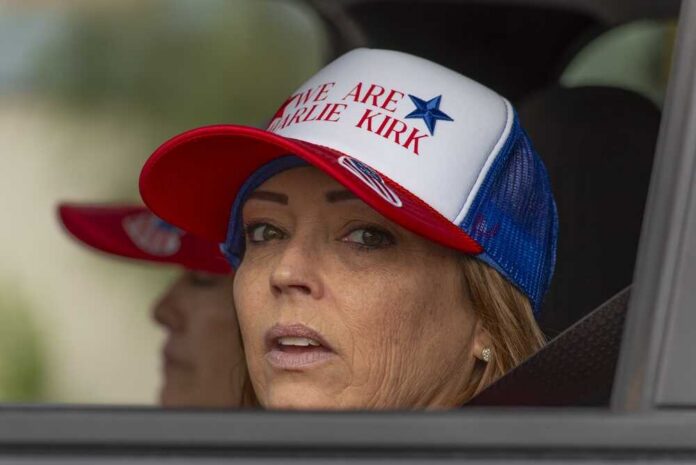
In a Utah courtroom this week, Erika Kirk sat feet from the man accused of assassinating her husband as the state began laying out a death‑penalty case that exposes just how fragile political life has become in America.
Story Snapshot
- Tyler Robinson faces a multiday preliminary hearing on aggravated murder charges in the 2025 assassination of conservative activist Charlie Kirk at Utah Valley University.
- Prosecutors are previewing key evidence, including DNA on the rifle, ballistics, surveillance video, and alleged digital confessions, as they seek permission to pursue the death penalty.
- Erika Kirk and Kirk’s parents are in court, continuing her push for a speedy, open trial that keeps media and the public inside the process.
- The case comes as researchers and public officials continue warning about rising concerns over political violence in the United States.
Inside the Utah courtroom: grief, security, and a first face‑to‑face
Inside Fourth District Court in Provo, Utah, the five‑day hearing is the first time Erika Kirk has been in the same room as Tyler Robinson, the 23‑year‑old accused of killing her husband. Charlie Kirk was shot in the neck on September 10, 2025, while speaking to thousands at a Turning Point USA event on the Utah Valley University campus. Court officials prepared for a high‑profile, emotionally charged proceeding, increasing security as Kirk’s widow, his parents, and prominent political allies, including Donald Trump Jr., attended the opening day.
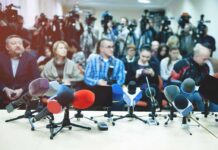
Utah law requires this preliminary hearing to decide if there is “probable cause” that Robinson committed the crimes charged. This is a lower bar than a jury trial, but it is still a critical moment: if Judge Tony Graf finds the evidence strong enough, Robinson will be formally arraigned and can then enter pleas. Reporters and the public are allowed to watch much of the hearing after Graf rejected defense motions to close the courtroom or block cameras, keeping a rare major assassination case in plain view.
The evidence prosecutors say ties Tyler Robinson to the assassination
Charging documents describe a single shot from a.30‑06 Mauser 98 rifle fired from the roof of the Losee Center at Utah Valley University, killing Kirk as he spoke. Investigators say surveillance video shows a man believed to be Robinson arriving on campus, moving to the roof, then jumping down and fleeing right after the shot. Police later recovered the rifle in a wooded area near campus. Forensic reports say Robinson’s DNA was found on the rifle and on the roof, forming a core part of the state’s case.
Ballistics work, which prosecutors plan to showcase this week, compares bullet fragments from Kirk’s autopsy to the recovered rifle and its ammunition. A federal firearms analysis reportedly could not conclusively match the fatal bullet to that exact gun, a gap Robinson’s defense calls important and “exculpatory.” Still, Utah County prosecutors argue that cartridge casings and tool marks are consistent with Robinson’s weapon and that, taken together with DNA and video, the physical evidence points strongly to him as the shooter.
Digital messages, alleged confessions, and a fight over hearsay
Beyond forensics, prosecutors are relying on digital records and a key witness: Robinson’s former roommate, described in filings as his romantic partner. According to the state, text messages between Robinson and this roommate after the shooting allegedly include statements prosecutors characterize as a confession. Investigators say Robinson also posted on the chat platform Discord, identifying himself as Kirk’s shooter shortly before surrendering to law enforcement.
Inside the Tyler Robinson courtroom:
• Erika Kirk was seen crying before the hearing began.⁰• Donald Trump Jr. and his wife were seated in the front row.⁰• Tyler Robinson was seen speaking and laughing with his attorney before proceedings started.⁰• Erika left the… https://t.co/U0yUEQrH6b— Tejpal Rawat (@JournalisTejpal) July 6, 2026
Some of this story will reach the judge through secondhand testimony. Judge Graf has ruled that law enforcement officers may offer hearsay at the preliminary hearing, meaning they can recount what witnesses and the roommate said even if those people are not called to testify in person this week. Robinson’s lawyers argued this weakens his rights and tried to compel the roommate to take the stand, but the judge denied that request. For many Americans watching, the heavy use of hearsay and media battles has prompted debate over how preliminary-hearing rules balance efficiency and defendants’ rights.
Erika Kirk’s push for an open, speedy path to justice
Since the killing, Erika Kirk has become a central voice in the case, not only as a widow but as the legally recognized representative of the victim. She has filed for a speedy trial, accusing Robinson’s defense of “undue” and “unwarranted” delays and reminding the court that, under Utah law, victims also have a right to timely justice. In a separate filing, she urged “meaningful” media access, warning that attempts to restrict cameras or reporters would hide a case of major public importance from the very citizens it affects.
At Kirk’s memorial service in Arizona soon after the assassination, Erika told tens of thousands of mourners that she forgave her husband’s alleged killer, calling him the kind of troubled young man Charlie had tried to reach. Her position reflects a broader public debate over transparency and the pace of criminal proceedings. It also raises hard questions about why a nation built on free speech and peaceful debate now sees microphones and rally stages as potential targets.
A brutal case in a wider pattern of political violence and mistrust
Experts say Kirk’s assassination is part of a darker trend, not an isolated shock. The Anti‑Defamation League found that from 2022 through 2024, all 61 political killings in the United States were carried out by right‑wing extremists, often acting alone after online radicalization. Researchers have identified polarization, declining institutional trust, and firearm access as factors associated with increased risks of political violence.
Polls show most Americans, left and right, now see political violence as a serious problem. A recent survey found nearly nine in ten adults say it is at least “somewhat” a problem, with a clear majority calling it a major one. Yet support for using violence remains low, under 10 percent, meaning people fear what a small, angry fringe can do while feeling that leaders are failing to cool the temperature. The case highlights broader questions about how courts handle politically charged prosecutions and how public confidence in the justice system is maintained.
Sources:
redstate.com, cbsnews.com, cnn.com, nypost.com, ksl.com, livenowfox.com, apnews.com, youtube.com, kutv.com, facebook.com, themedialine.org, pbs.org, journalofdemocracy.org, ctc.westpoint.edu, moreincommon.substack.com