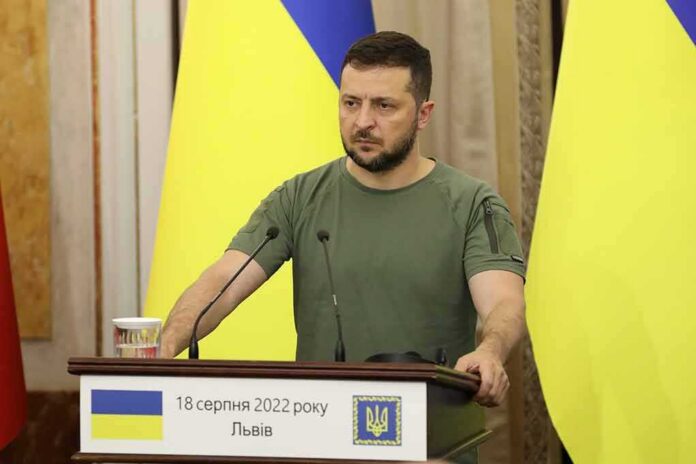
As Ukraine’s war grinds into a fourth year, Volodymyr Zelensky is mocking Moscow’s “failed” eastern offensive while both Russia and the West spin battlefield stories that leave ordinary people wondering who to trust and whether anyone is serious about peace.
Story Snapshot
- Zelensky says Russia set and missed 15 deadlines to seize eastern Ukraine and has “failed” recent offensives.
- Russia still controls most of Donetsk and claims to be advancing, showing a gap between rhetoric and grim reality.
- Both sides use battlefield narratives to sway foreign aid, public opinion, and peace talks, feeding distrust of elites.
- Americans see another distant war where hundreds of billions in aid flow out while basic problems at home go unsolved.
Zelensky’s claim: Russia’s drive has stalled, but the cost is huge
Ukrainian President Volodymyr Zelensky recently said the Kremlin set and then postponed 15 deadlines over four years to capture the eastern Donbas region, painting Moscow’s campaign as a string of broken promises to its own people. Ukraine’s top commander, General Oleksandr Syrskyi, has echoed this line, saying Russia’s big spring and summer 2025 offensives were “effectively thwarted” and failed to reach key goals like creating a buffer zone near Sumy and Kharkiv or seizing the city of Pokrovsk. These statements aim to show Ukraine holding the line despite being outgunned, but they also underscore how long and grinding the war has become for both soldiers and civilians.[1][3]
Zelensky and his commanders admit the battlefield is extremely hard. Russia has more troops, more artillery, and new drone and electronic warfare tools. Ukrainian sources describe Russia’s push along the eastern front as slow and bloody, with small advances measured in meters rather than miles. To hit back, Ukraine has stepped up strikes deep inside Russia, including attacks on oil refineries around Moscow and other energy sites meant to weaken Russia’s war machine. These moves score points in the information war and show initiative, but they also risk blowback and raise hard questions about escalation and civilian infrastructure being caught in the crossfire.[2][3][10]
Russian narrative: inching forward while claiming success
Russia’s leaders tell a very different story. Russian President Vladimir Putin and his defense officials insist their forces are advancing across the frontline and that the “strategic initiative” now belongs to Russia. They boast about strikes on Ukrainian troop sites and drone hubs, and claim to be “practically reaching” key towns like Kostyantynivka in Donetsk. Yet independent maps and analysts show a more mixed picture: Russia has taken chunks of territory in the east and southeast since 2024, but recent months have brought fewer gains, stalled attacks, and heavy losses. Even Russia’s own supporters admit progress is slow, undercutting talk of a sweeping victory.[5][11][12]
These dueling narratives matter because outsiders have little direct access to front line data. Western conflict trackers note that Russia seized thousands of square kilometers in Donetsk during earlier pushes, and now controls more than 70 percent of that region. At the same time, groups like the Institute for the Study of War report that Russia made no net territorial gains in Ukraine in March 2026, citing Ukrainian counterattacks and Russian logistical and command problems. Put simply, Russia is grinding forward in some areas and stalling in others. Calling the entire drive a “failure” or a “success” hides how messy the reality is for people living under shells and drones.[3][5][10]
Peace proposals, propaganda, and a long war with no clear end
Zelensky says Ukraine has offered multiple ideas to end the war, but that Russia has rejected every proposal. Moscow, in turn, demands that Ukraine pull out of the Donbas region as a condition to end what it calls the “hot phase” of the war, a step Kyiv sees as surrender. Scholars who study long conflicts call this pattern “protracted war”: fights that drag on for years because neither side can win outright and neither side is ready to accept a compromise that feels like a betrayal. In these wars, both governments lean heavily on propaganda and patriotic messaging to keep people mobilized and to justify more sacrifice.[1][5][21]
Ukraine's Zelenskiy mocks Russian military drive, says Moscow rejects all peace proposals – Reuters https://t.co/DvyAqYMruT
— Arnaud Mercier – #Entrepreneur #Versailles (@arnaudmercier) June 30, 2026
For Americans watching from afar, this looks like a familiar movie. Many see Washington sending over $100 billion a year in aid, weapons, and support while basic needs at home—border security, energy prices, debt, and crumbling infrastructure—feel ignored. Conservatives resent what they view as globalist priorities and endless foreign entanglements. Liberals worry about the human cost, rising inequality, and a foreign policy that seems driven by elite interests rather than clear goals. Both sides increasingly agree on one thing: the federal government looks more focused on managing narratives and election optics than on delivering honest answers about how this war ends and what victory would even mean.[8]
Sources:
[1] YouTube – Ukraine’s Zelenskiy mocks Russian military drive
[2] Web – Ukraine’s Zelenskiy Mocks Russian Military Drive, Says Moscow …
[3] Web – Zelensky faces outpouring of criticism over failure to warn of war
[5] Web – Zelensky says all officials in charge of military recruitment offices …
[8] YouTube – LIVE | Sumy Burns as Zelensky Tests Putin With Strikes …
[10] X – Ukraine’s Zelenskiy mocks Russian military drive, says Moscow …
[11] Web – Russian Offensive Campaign Assessment, June 23, 2026 | ISW
[12] Web – Russian Offensive Campaign Assessment, June 1, 2026 | ISW
[21] Web – Operational Law Handbook > Chapter 3