A rising Democratic star just walked away from a crucial Senate race, blaming money and polls while deeper questions about party power and internal scandals still hang in the air.
Story Snapshot
- Mallory McMorrow suspended her Michigan U.S. Senate campaign after falling behind in polls and fundraising.
- Her exit turns the Democratic primary into a straight fight between establishment-backed Haley Stevens and progressive Abdul El-Sayed.
- McMorrow ran on small donors and no corporate political action committee money, but that was not enough in a big-money race.
- Unproven scandal claims and quiet party leadership highlight how insiders, money, and media shape what voters are allowed to know.
How McMorrow’s Campaign Collapsed
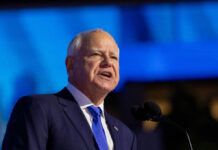
Michigan state senator Mallory McMorrow announced on Sunday that she is suspending her campaign for the United States Senate, just weeks before the August primary. She said she made the decision because her polling numbers had dropped and her fundraising fell far behind rivals Haley Stevens and Abdul El-Sayed. Recent reports showed her stuck in a distant third place, despite early buzz as a “rising star” who might bridge the party’s moderate and progressive wings.
News outlets report that Stevens, aligned with the Democratic establishment, has spent around $6 million on the race so far, giving her a major edge in ads and name recognition. McMorrow, by contrast, had much less money to spend, which made it hard to reach voters across a large state and keep up with negative or confusing storylines. Her campaign’s limited cash and lack of broad voter base turned the primary into a two-person race long before votes were cast.
A Money-Driven Primary, Not a Battle of Ideas
In her announcement, McMorrow thanked “thousands of volunteers” and “everyone who donated what you could,” stressing that her campaign took **zero corporate political action committee dollars**. That message fits what many voters on both the left and right feel: big donors and party insiders dominate elections, while ordinary people are asked to clap and pay. But good intentions could not match the scale of modern Senate races, where tens of millions in spending are now common.
Research on Senate campaigns shows that while outside group spending keeps rising, the money that matters most still comes from campaigns themselves and their direct backers. In Michigan, that reality appears clear. Stevens had heavy financial support and backing from party allies, while El-Sayed drew energy from national progressive figures. McMorrow tried to offer a middle path, but without enough money, her ideas never got the loud megaphone that statewide races usually require.
Scandal Talk, Hasan Piker, and the Limits of Proof
McMorrow began losing support after she attacked El-Sayed for appearing at a campaign event with Hasan Piker, a left-wing streamer known for defending Hamas and calling Israel an “apartheid state.” Media reports say her move backfired, boosting El-Sayed’s standing with some progressives and painting her as out of step with the party’s activist base. The clash highlights deep divides inside the Democratic Party over Israel, terrorism, and how far “anti-establishment” voices should go.
Online critics went further, accusing McMorrow of pressuring a pollster, acknowledging antisemitism, and deleting posts to cover her tracks. But in the available record, there is no court filing, Freedom of Information Act release, or verified witness statement to prove these claims. Major outlets like the New York Times, Politico, and the Washington Post frame her exit as driven by weak polls and money, not misconduct. That media focus shapes public opinion and leaves many Americans wondering what is real and what is spin.
Silence from Party Leaders and Growing Public Distrust
Michigan Democratic leaders have said nothing public about the misconduct allegations aimed at McMorrow, either to support them or to knock them down. Their silence sends a clear message: the party prefers to move on quickly to a tidy two-way race between Stevens and El-Sayed. For voters who already believe both parties protect insiders first and truth second, this looks like another case where the “deep state” of party elites quietly manages a problem out of sight.
Mallory McMorrow announces suspension of US Senate campaignhttps://t.co/Grzcwl2xFt
NO, NO, NO, democrats are what nearly destroyed America, now there going for COMMUNISM!!! 2026 VOTE REPUBLICAN RIGHT DOWN THE CARD!!! 👏🎉👏🎉👏🎉👏🎉— Hyliner1983 (@Hyliner1983) July 6, 2026
At the same time, a Reddit thread on the race warns about “brigading pressure” and urges caution when posting criticism. That reflects wider fears that big platforms may bury or down-rank controversial content, especially when it challenges favored candidates or narratives. For conservatives tired of “woke” speech policing and liberals angry about corporate control of online spaces, this episode reinforces a shared worry: powerful interests choose which scandals matter and which simply vanish.
What McMorrow’s Exit Says About the System
McMorrow told supporters, “I may be suspending this campaign, but I am not leaving the fight,” promising to back whoever wins the primary against Republican Mike Rogers in November. Her words fit a familiar pattern. Even when the system pushes them out, politicians often stay loyal to the party brand. That loyalty keeps national leaders happy but can frustrate voters who crave someone willing to challenge the machine itself, not just change the faces at the top.
This race in a Trump-won swing state will help decide control of the Senate, yet much of the story has been about money, media framing, and insider power—not clear debate over how to fix inflation, immigration, or the shrinking middle class. Whether voters lean right or left, many now see episodes like McMorrow’s rise and fall as proof that the federal government and both major parties are failing them. The Michigan Democratic primary is not just a local contest; it is another window into how the system protects itself, often at the expense of transparency and trust.
Sources:
townhall.com, nytimes.com, politico.com, youtube.com, washingtonpost.com, x.com, cnn.com, brennancenter.org