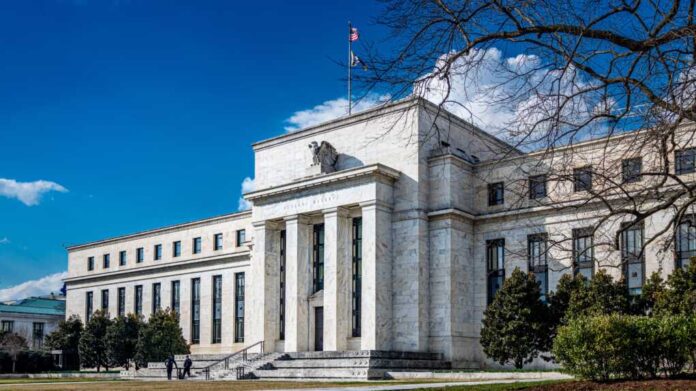
Two Trump-appointed Federal Reserve officials have publicly broken ranks, warning that the central bank’s refusal to cut interest rates now could risk derailing the U.S. economy as inflation persists and political pressures mount.
Story Snapshot
- Federal Reserve holds rates steady for a fifth straight meeting as inflation remains elevated.
- Two Trump-appointed officials issue rare public dissents, urging immediate rate cuts to support growth.
- The dual dissent marks the first such split on a Fed rate decision since 1993, highlighting deep divisions.
- Public and political pressure intensifies, with former President Trump calling for aggressive action to stimulate the economy.
Trump-Era Appointees Challenge Fed Caution Amid Economic Crossroads
For the first time in over three decades, the Federal Reserve faces an open rift as Vice Chair for Supervision Michelle Bowman and Governor Christopher Waller—both appointed by former President Trump—formally dissented from the central bank’s July 30 decision to keep the benchmark interest rate at 4.25%–4.5%. The officials argue that the Fed’s “wait and see” approach risks stalling economic momentum, especially as the effects of Trump-era tariffs push inflation temporarily higher but show signs of fading. Their stance underscores a growing divide within the bank’s leadership at a time when Americans are feeling the squeeze of persistent inflation and elevated borrowing costs.
Watch: Fed’s Christopher Waller Says To Cut Rates Now
Bowman and Waller’s dissent—publicly announced on July 31—signals a significant challenge to Fed Chair Jerome Powell’s majority, who insists that holding rates steady remains the best course until inflation comes down further. The Board’s split is especially consequential because it reflects not just economic disagreement but also the influence of political and public pressures, with President Trump urging the Fed to “get out of the way and let America grow again.” This rare dual dissent, the first since 1993, has roiled financial markets and injected new uncertainty into monetary policy at a critical juncture for the nation’s economy.
Inside the Fed: Disagreement and Its Economic Stakes
The Federal Reserve’s decision comes against a backdrop of moderate economic growth and solid, though softening, labor market data. Inflation, as measured by the Personal Consumption Expenditures (PCE) index, rose to 2.6% in June—still above the Fed’s 2% goal. Chair Powell and the majority argue that caution is warranted to avoid reigniting inflation, especially with continuing tariff effects and global instability clouding the outlook. However, Bowman and Waller maintain that these inflationary pressures are short-lived and that delaying a rate cut risks undermining job growth and consumer confidence, potentially tipping the economy into a downturn.
Bowman warned that the Fed’s delay could “harm the labor market and economic growth,” while Waller criticized the majority’s reluctance as “overly cautious.” Their dissent has resonated with business leaders and borrowers frustrated by high interest costs, and has emboldened calls from conservative lawmakers and advocates for policies that prioritize American jobs and economic vitality over bureaucratic caution. Many see echoes of the Trump administration’s commitment to pro-growth policies and skepticism of unelected officials dragging their feet in the face of mounting economic pain.
Political Pressure, Public Anxiety, and Fed Independence
President Trump, now back in office, has not been shy about his expectations for the Fed. In recent remarks, he lambasted Powell’s leadership, saying, “The Fed needs to cut rates now—not next year—so American families and businesses can thrive.” Trump’s appointees on the Board have echoed this message, making clear their belief that monetary policy should respond more nimbly to changing conditions. This dynamic has raised fresh questions about the central bank’s independence and the proper balance between expert judgment and democratic accountability.
Financial markets have reacted with heightened volatility as investors weigh the prospect of a divided Fed and the potential for further political intervention. Some economists warn that visible splits could undermine the institution’s credibility, while others argue that open debate is healthy and reflects the seriousness of today’s challenges. What is clear is that Americans—especially those on fixed incomes, small business owners, and retirees—are watching closely, hoping that policymakers will prioritize growth and stability over bureaucratic inertia.
Expert Views and Conservative Principles
Economists and monetary policy experts agree that the Fed faces a tough trade-off: move too fast to cut rates and risk undoing progress on inflation, wait too long and risk choking off recovery. Many analysts, including those at Fox Business, note that the inflationary impact of tariffs is likely to be temporary, lending support to the dissenters’ case. Others caution that yielding to political pressure could erode trust in the central bank, but they acknowledge that the stakes for Main Street are real and pressing.
From a conservative perspective, the risk of government overreach and bureaucratic delay is especially concerning. Defending American freedom and prosperity means ensuring that unelected officials do not stand in the way of economic opportunity and that monetary policy supports—not stifles—growth for hardworking families. While the Fed’s independence is vital, so too is its accountability to the American people and their elected leaders. Ultimately, the outcome of this debate will shape not just the economy but the character of American self-government in an era of rising global competition and domestic uncertainty.