The Trump White House has escalated its long-running feud with the press by launching an unprecedented official government webpage to catalog and label major news outlets as “biased” and “misleading.” This formalization of media criticism represents a significant departure from democratic norms, raising serious questions about press freedom, government overreach, and the future of independent journalism in America.
Story Highlights
- White House creates official “Media Bias Tracker” webpage targeting major news organizations.
- Lists include The New York Times, Washington Post, Wall Street Journal, and Associated Press.
- Press Secretary frames initiative as “holding the media accountable” for anonymous sourcing.
- News organizations defend editorial independence, call tactics intimidation attempts.
Administration Launches Official Media Accountability Platform
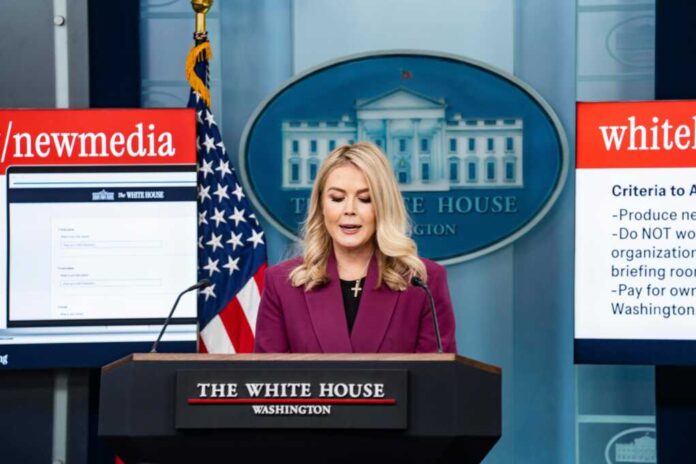
The Trump administration unveiled www.whitehouse.gov/mediabias on December 2, 2025, establishing the first official government webpage dedicated to cataloging news outlets deemed problematic. Press Secretary Karoline Leavitt announced the initiative as a response to what she characterized as historically low journalism standards. The webpage targets established mainstream outlets that frequently report critically on the administration, representing a formalization of longstanding tensions between Trump and the press corps.
White House names and shames ‘biased’ news outlets and reporters with new website https://t.co/PvMYC0UQuU pic.twitter.com/Mlh15i3m0V
— New York Post (@nypost) November 30, 2025
Major News Organizations Face Government Scrutiny
The bias tracker specifically names prestigious outlets including The New York Times, The Washington Post, The Wall Street Journal, and the Associated Press as problematic sources. Notably, Fox News was initially included but quickly removed due to what officials described as an error, suggesting the list remains subject to revision. This targeting of America’s most established news organizations signals an escalation beyond traditional presidential criticism of unfavorable coverage into institutionalized government evaluation of journalistic credibility.
Press Secretary Cites Anonymous Sourcing Concerns
Leavitt justified the tracker by citing concerns about “fake stories” containing “inaccurate characterizations” based on anonymous sourcing practices. She stated that “the standard for journalism unfortunately has dropped to such a historic low in this country,” positioning the administration as defenders of factual reporting. The initiative follows Trump’s pattern of personal attacks on journalists, including recent comments calling New York Times reporter Katie Rogers “ugly, both inside and out” and telling another reporter to “quiet piggy” during press interactions.
News Organizations Defend Editorial Independence
The New York Times responded forcefully, defending its reporting as based on “first hand reporting of the facts” and stating that name-calling would not change their editorial standards. The organization emphasized that “expert and thorough reporters like Katie Rogers exemplify how an independent and free press helps the American people better understand their government and its leaders.” Media outlets characterized the tracker as intimidation tactics designed to suppress critical coverage rather than legitimate accountability measures, raising concerns about government overreach into press freedom.
Constitutional and Democratic Implications
This unprecedented use of official government resources to discredit news organizations raises serious questions about First Amendment protections and the appropriate relationship between executive power and press independence. The formalization of media criticism through government channels represents a departure from traditional democratic norms where administrations engage with press criticism through informal channels rather than official government platforms. Patriots concerned about constitutional principles should recognize this as potential government overreach that could set dangerous precedents for future administrations seeking to pressure independent journalism and limit accountability reporting.
Sources:
- White House publishes page of ‘biased’ news outlets in latest criticism of press
- White House ‘Media Offender’ website escalates Trump’s attacks on journalists
- Trump launches ‘media bias tracker’ as he names ‘offender of the week’ | Daily Mail Online
- White House Launches Worthless And Whiny Taxpayer-Funded ‘Media Bias’ Tracker | Techdirt