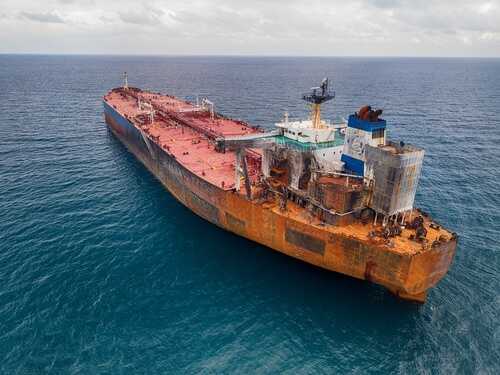
A U.S. Hellfire missile slamming into a commercial tanker’s engine room in the middle of a “peace” push with Iran is exactly the kind of blurred line between security and overreach that has many Americans worried the system serves war planners and elites, not them.
Story Snapshot
- The United States disabled the Botswana-flagged tanker M/T Lexie with a Hellfire missile as it sailed toward Iran’s Kharg Island.[1]
- United States Central Command (CENTCOM) says the ship ignored repeated orders for about 24 hours during a wider blockade of Iranian ports.[1]
- The strike highlights a legal and moral gray zone between sanctions enforcement and what critics see as economic warfare and undeclared naval conflict.[1]
- Both conservatives and liberals may see this as more proof that Washington’s permanent security bureaucracy acts first and justifies later.
What Exactly Happened To The Tanker In The Gulf?
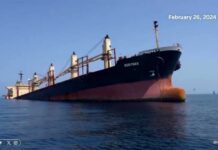
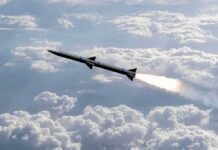
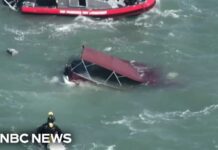
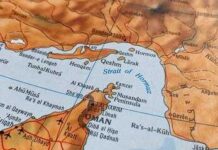
United States Central Command reported that a U.S. military aircraft fired an AGM-114 Hellfire missile into the engine room of the Botswana-flagged oil tanker M/T Lexie as it transited international waters near the Arabian Gulf.[1] The tanker was unladen, meaning it was not carrying cargo, and was sailing toward Iran’s Kharg Island, a critical export terminal.[1] Video released by the command and shared by news outlets shows the moment the missile struck, crippling the ship and bringing it to a stop.[1]
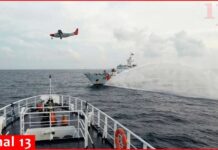
CENTCOM says U.S. forces had tracked the tanker and issued multiple orders and warnings over roughly 24 hours, instructing it not to proceed toward Iranian ports under an active U.S. maritime blockade.[1] According to the command, the crew failed to comply and continued toward Kharg Island.[1] U.S. officials describe the strike as the last resort to enforce the blockade and prevent the vessel from reaching an Iranian facility that Washington says is covered by sanctions.[1][2]
How Washington Is Framing The Strike – And What Is Missing
The U.S. government presents the attack as a lawful enforcement action in a broader campaign to pressure Iran through maritime interdictions rather than a step toward open war.[1][2] Reporting describes the operation as part of President Donald Trump’s blockade strategy, intended to force Tehran back to negotiations on terms more favorable to Washington.[2] CENTCOM emphasizes that the tanker was empty and that the missile was aimed at the engine room, apparently to minimize casualties and environmental damage.[1]
At the same time, the official statement does not clearly spell out the specific legal authority for firing a missile at a commercial vessel in international waters. The public record, as of now, does not include the radio logs, bridge recordings, or written orders that would verify the claim of repeated ignored warnings.[1][2] For Americans on both the right and the left who already distrust the national security establishment, that lack of transparency feeds the suspicion that “national security” has become a catch-all justification for almost any use of force abroad.
Blockade Strategy: Sanctions Enforcement Or Economic Warfare?
The strike on M/T Lexie is part of a pattern in which the United States uses naval power to enforce economic sanctions in ways that look a lot like a blockade.[1][2] In recent years Washington has seized or diverted tankers linked to sanctioned states such as Iran and Venezuela, often describing these actions as targeting “shadow fleets” that help governments evade restrictions. Analysts at the Center for Strategic and International Studies note that such seizures can be both lawful enforcement and a strategic lever in a broader pressure campaign.
Supporters of a hard line argue that denying revenue to hostile regimes reduces their ability to fund militias, missiles, and terrorism, thereby protecting American troops and allies. Critics counter that blockades and disabling strikes on commercial vessels amount to economic warfare that punishes ordinary people, drives up global energy prices, and risks miscalculation or retaliation.[1] For citizens already angry about inflation, high fuel costs, and endless foreign entanglements, another military operation in the Strait of Hormuz feels less like protection and more like a dangerous gamble with their wallets and their security.
Why This Incident Resonates With Americans Tired Of The “Forever Crisis”
Conservatives who back strong borders and “America First” policies may still question why U.S. aircraft are enforcing a blockade thousands of miles away when the southern border remains porous and domestic problems go unresolved. Liberals who oppose interventionism see another example of Washington using military force against a weaker state while social needs at home are underfunded. Both camps share a deeper worry: that unelected defense and intelligence officials make high-risk decisions with minimal debate and only explain the rules afterward.
🚨 𝗕𝗥𝗘𝗔𝗞𝗜𝗡𝗚: 𝗨𝗦 𝗠𝗜𝗟𝗜𝗧𝗔𝗥𝗬 𝗗𝗜𝗦𝗔𝗕𝗟𝗘𝗦 𝗜𝗥𝗔𝗡-𝗕𝗢𝗨𝗡𝗗 𝗢𝗜𝗟 𝗧𝗔𝗡𝗞𝗘𝗥 𝗔𝗙𝗧𝗘𝗥 𝗜𝗚𝗡𝗢𝗥𝗜𝗡𝗚 𝗪𝗔𝗥𝗡𝗜𝗡𝗚𝗦
🇺🇸🇮🇷 || US forces fired a Hellfire missile at the Botswana-flagged M/T vessel, disabling its engine room after it ignored repeated… pic.twitter.com/PKIe5CWm2Z
— Resonant News🌍 (@Resonant_News) June 3, 2026
Events like the Hellfire strike on M/T Lexie highlight a growing gap between how leaders talk about peace and how the security apparatus actually operates.[1][2] Officially, the United States is seeking a negotiated end to tensions with Iran, yet the military is running a blockade that has already disabled multiple commercial ships.[1] For many Americans, that contradiction reinforces the belief that the federal government—regardless of which party controls it—serves entrenched strategic and corporate interests before the everyday citizen who just wants stability, affordable energy, and a realistic shot at the American Dream.
Sources:
[1] YouTube – US fires Hellfire missile at tanker heading toward Iran
[2] Web – U.S. Disables an Iran-Linked Tanker With a Hellfire Missile