When neighbors warn the system that a troubled man is making death threats and a judge sends them home unprotected, a triple homicide stops feeling like a mystery and starts looking like another institutional failure.
Story Snapshot
- Two women sought protection from Jacob Baker days before three elderly men were killed on Hawaii’s Big Island, but a judge rejected their requests for restraining orders.[2]
- Police say Baker then allegedly murdered three male neighbors in rural Puna over two days, triggering a massive manhunt with state and federal help.[1][2]
- The case exposes how courts, police, and mental health systems often miss clear warning signs until after innocent people are dead.[2]
- Frustration is growing across the political spectrum as citizens see elites protected by security details while ordinary Americans are told there is “insufficient evidence” to keep them safe.[2]
How a Rural Community Went From Warnings to a Triple Homicide
Hawaii Island police allege that thirty-six-year-old Jacob Baker of Pahoa killed three elderly male neighbors in the rural Puna district over a span of roughly forty-eight hours, turning a quiet farming area into the center of a manhunt that gripped the Big Island.[1][2] Authorities say the victims, identified as sixty-nine-year-old Robert Shine, sixty-nine-year-old John Carse, and a seventy-nine-year-old man, were found dead at or near their homes in remote parts of Pahoa.[1][2] Investigators report that two of the victims lived near each other, suggesting the killings unfolded within an intertwined local community.[1][2]
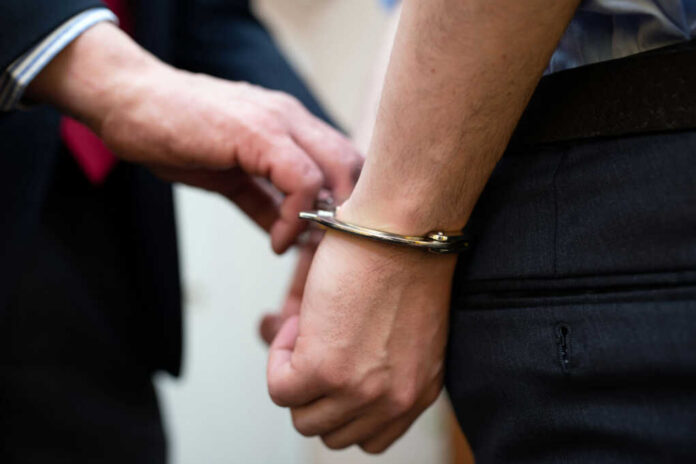
Police and prosecutors say Baker now faces one count of first-degree murder, three counts of second-degree murder, and multiple related charges including burglary, criminal property damage, theft, and unauthorized entry into a motor vehicle.[1][3] Officers described him to the public as “armed and extremely dangerous” during the two-day manhunt, urging residents to shelter in place while teams from local, state, and federal agencies searched lava fields, backroads, and thick vegetation.[1][2][4] That search ended when officers used surveillance footage to track Baker to a vacant lot area in Kalapana, where he was ultimately found hiding in a small cave and arrested.[1][2]
Restraining Orders Filed, Then Denied, Just Before the Killings
Days before the first killing, two women went to court seeking temporary restraining orders against Baker, telling the system he was threatening their lives and the lives of others living on a farm along Papaya Farm Road in the same general area.[2] Reporting based on those court filings describes allegations that Baker was entering property without permission, taking items, attempting to squat, and making residents feel unsafe with explicit threats to kill them and a disabled man on the farm.[2] The petitions painted a picture of a man whose behavior had already rattled neighbors long before any shots were fired.
Despite those written warnings, a judge denied both petitions, finding “insufficient evidence” that the alleged harassment occurred or that the petitioners faced an imminent threat, according to journalists who reviewed the records and interviewed court observers.[2] Judges are not required to give detailed explanations, so the public still has no clear account of why these specific claims failed to meet the legal threshold for protection.[2] For people on both the left and right who already believe the system bends over backward to protect institutions and elites while discounting ordinary citizens, this sequence feels painfully familiar.
The System’s Narrow Lens on Risk and Mental Instability
Local reporting and video evidence show that in the days leading up to the killings Baker posted disturbing, erratic videos online, adding to neighbors’ sense that something was seriously wrong with his mental state. After his arrest, a judge ordered a mental fitness examination to determine whether he is competent to stand trial, underscoring that the criminal justice system is only now seriously assessing his psychological condition after three men are already dead. That timing reinforces a broader pattern in America where mental health concerns are recognized only after extreme violence forces officials to act.
At the same time, court databases in Hawaii reportedly showed no prior violent felony convictions for Baker before the killings, even though he had lower-level offenses such as traffic violations and driving under the influence.[4] Law enforcement officials can point to that record to argue they were working with limited formal evidence of past violence when neighbors first started complaining.[4] The gap between what locals see on the ground and what appears in official records feeds the sense that the government’s risk radar is too narrow and too slow, especially when people without influence try to sound the alarm.
What This Case Reveals About Institutional Priorities
The Big Island triple homicide is now prompting painful questions: if written death threats, strange public behavior, and trespassing reports are not enough to justify even a temporary protective order, what exactly must ordinary citizens show to get the system’s attention?[2] People across the political divide see a pattern where agencies act decisively when powerful interests are at stake but become cautious and legalistic when everyday families ask for basic protection.[2][4] That contrast erodes trust in courts and law enforcement, especially in rural communities that already feel overlooked.
🔴 Hawaii man charged with murder in triple homicide across Big Island
Jacob Baker, 36, of Pahoa was charged Sunday with one count of first-degree murder and three counts of second-degree murder, plus burglary, property damage, and theft offenses. He is held without bond.
Baker… pic.twitter.com/Bb7rn5si58
— NewsTongue (@NewsTongueX) May 31, 2026
For conservatives who emphasize personal responsibility and law and order, this story looks like another example of a justice system that hesitates to restrain dangerous individuals until after they commit horrific crimes.[2][4] For liberals who worry about inequality and neglected social services, it highlights how mental health, housing instability, and community safety warnings are repeatedly brushed aside until tragedy forces headlines.[2] Both sides can see their fears confirmed in a case where neighbors begged for help, government gatekeepers said “not enough evidence,” and three elders never made it out alive.
Sources:
[1] YouTube – Neighbors’ warnings ignored before Hawaii triple homicide | Wake Up …
[2] YouTube – Hawaii triple murder suspect captured after massive manhunt
[3] YouTube – Suspect in Puna triple homicide charged with multiple murder counts
[4] YouTube – Triple homicide suspect appears in Hilo court