A near-disaster on a Miami runway is raising tough questions about air safety and federal oversight that Americans cannot afford to ignore.
Story Snapshot
- American Airlines Flight 308 aborted takeoff after a business jet entered its active runway.[1][2]
- Air traffic control audio shows the controller saying the jet crossed an active runway without clearance.[1]
- The two aircraft came within about one-third of a mile, narrowly avoiding a possible collision.[2][7]
- The Federal Aviation Administration (FAA) has opened a formal investigation amid a wider pattern of runway incursions in Miami.[2][12]
Close Call On A Busy Miami Runway
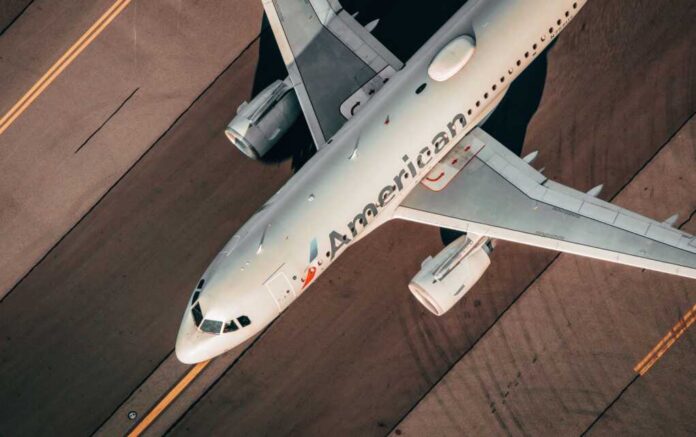
American Airlines Flight 308, bound for Bermuda, was accelerating down the runway at Miami International Airport early Saturday evening when the crew suddenly slammed the brakes.[1][2] The pilots had been cleared for takeoff and were rolling when they saw another aircraft directly ahead on the same active runway.[1] That second aircraft was a NetJets Embraer Phenom 300 business jet, Flight EJA434, being operated by a third-party maintenance company rather than NetJets itself.[1] The quick stop prevented what could have been a deadly impact for hundreds of passengers.[1][2]
Reports from aviation trackers and news outlets say the two aircraft came within about one-third of a mile of each other at their closest point.[2][7] That may sound like a long distance, but on a runway with a large jet at takeoff speed, it is dangerously tight. ABC and other outlets described the event as a “dangerous close call” on a busy Florida runway.[8] Thankfully, no one was hurt, both planes remained under control, and the American flight later departed safely for Bermuda once the runway was cleared and checks were complete.[1][2]
What The Tower Audio Reveals
The most troubling part of this incident is what air traffic control audio captures between the business jet and the Miami tower controller.[1][2] After the near miss, the controller tells the Phenom crew, “You just crossed an active runway,” making clear that, from the tower’s view, the jet entered the runway without proper clearance.[1] The pilot immediately pushes back, saying, “You just instructed me to cross the runway, sir,” claiming he thought he had been told to proceed.[1]
The controller then responds, “No, we said Amerijet 461,” explaining that any crossing instruction was meant for a different aircraft entirely.[1][2] This brief exchange highlights a serious miscommunication at a critical moment, with one party believing they had permission to cross and the other insisting they did not. For everyday Americans, this sounds like the kind of confusion that should never happen when lives depend on every word spoken over the radio.
FAA Investigation And Questions Of Oversight
The Federal Aviation Administration has opened a formal investigation into the incident, as confirmed by aviation outlets following the event.[2] So far, no official FAA report or full transcript of all controller and pilot communications has been released to the public. That means we do not yet have a complete, line-by-line record to show exactly what was said, to whom, and at what time. For many readers, that lack of detailed transparency will feel familiar from other federal investigations that take months or years to surface.[2]
NetJets, the private aviation company whose name is tied to Flight EJA434, has confirmed that the Phenom was not under its direct operational control when the event occurred.[1] Instead, a third-party maintenance provider was responsible for running the aircraft. NetJets has otherwise declined comment, leaving a large gap in the public record about crew training, vendor procedures, and how this jet ended up on an active runway at the worst possible time.[1] That silence raises fair questions about oversight whenever responsibility gets passed from the main operator to outside contractors.
Miami’s Pattern Of Runway Incursions
This was not a freak, one-off occurrence. Miami International Airport already shows a troubling record of runway incursions and complex taxiway “hot spots.” A Miami-Dade County document notes that the FAA’s Aviation Safety Information Analysis and Sharing System recorded 12 runway incursions at Miami in a recent monitoring period.[12] Research on United States airports finds that complex runway and taxiway layouts, like those at Miami, are linked to higher rates of incursions and greater risk.[9][16]
American Airlines plane forced to abort takeoff after another jet veers onto same runway at Miami airport https://t.co/ZGlokPyEjp
— TruthWillCome2.0 (@SandyCee2400) June 29, 2026
Miami airport planners are now working on a Runway Incursion Mitigation project to deal with one such hot spot, with construction stretching into 2029.[10][9] That long timeline shows how slowly large systems move, even when clear safety issues are known. While the Trump administration pushes for tighter accountability across federal agencies, conservatives will want to watch whether the FAA fixes root problems or simply adds more rules and paperwork. The stakes are real: every runway incursion is a warning shot that lives, property, and trust in basic government competence are on the line.[9][12][16]
Sources:
[1] Web – American Airlines plane forced to abort takeoff after another jet …
[2] Web – American Airlines Flight AA308 was rolling down a Miami runway …
[7] Web – A dangerous close-call on a busy Florida runway, two aircraft …
[8] Web – AA308 (AAL308) American Airlines Flight Tracking and History
[9] Web – Runway Incursion in Miami Forces American Airlines Flight to Abort …
[10] X – Runway Incursion in Miami Forces American Airlines Flight to Abort …
[12] Web – Runway Incursion Forces Aborted Takeoff at Miami – Facebook
[16] Web – [PDF] Investigating Runway Incursions in The United States Airports