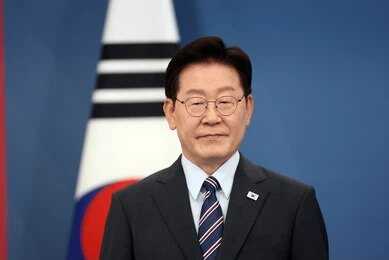
When a president orders a taxpayer-funded probe over a soccer loss, it exposes a deeper fight over who really controls public money and power.
Story Snapshot
- South Korea’s president ordered an investigation into the national team’s World Cup collapse, citing wasted taxpayer funds.
- The probe targets alleged favoritism and broken hiring rules in picking head coach Hong Myung-bo, who has now resigned.
- The sports ministry will scrutinize leadership decisions, governance, and use of public money inside the Korea Football Association.
- This clash mirrors a global pattern: state-funded sports bodies run by entrenched elites with weak oversight and little transparency.
President turns World Cup failure into a test of accountability
South Korea crashed out of the expanded 2026 World Cup at the group stage, despite facing a group many analysts viewed as manageable and entering as one of the higher-ranked teams in it. Within hours, President Lee Jae-myung publicly called the performance “utterly baffling” and blamed “organizational and personnel failures” inside the national program. He said the collapse was not just bad luck but the product of deeper mismanagement that had to be exposed and corrected.
President Lee then took an unusual step for a head of state: he ordered a formal government investigation into the soccer federation that runs the team. He directed the Ministry of Culture, Sports and Tourism to examine how the campaign was run, who made key decisions, and why a team with strong expectations failed so early. He framed the move as a duty to citizens, not just as a response to angry fans, and promised reforms to the way sports are run.
Taxpayer money, favoritism claims, and a coach under fire
In his written order, Lee stressed that “significant national taxpayer funds and state support resources” went into the World Cup effort. South Korea’s football program receives public funding each year, which is supposed to support training, travel, and elite development. Lee said that when public money is at stake, leaders must show the team was built on merit, not on backroom deals, because ordinary people are effectively forced investors in the project.
The president’s sharpest criticism centered on the hiring of head coach Hong Myung-bo, who was reappointed in 2024. Lee accused decision makers of putting “favoritism” and personal networks ahead of competence, warning that when “an incompetent person is selected as a leader, the outcome is as clear as day.” The Sports Ministry has previously questioned whether the Korea Football Association followed its own hiring rules, including running a real interview process for the job. That suggests this World Cup loss became the breaking point in a much longer fight over how the coach was chosen.
Resignation, public anger, and what the investigation will probe
Hours after Lee’s remarks and the official probe order, Hong Myung-bo announced that he would resign as head coach, saying he took responsibility for the results. His exit satisfied some critics but did not end the backlash. Fans in South Korea had already turned on the team after a shock defeat to South Africa that sealed their fate, with local and international outlets describing the response as furious and emotional. Many demanded not just a new coach but a cleanup of the entire system that chose him.
The investigation by the Ministry of Culture, Sports and Tourism will now dig into three main areas: governance inside the Korea Football Association, the hiring and leadership choices around Hong, and the handling of public funds tied to the World Cup campaign. Officials are expected to review internal procedures, examine who had appointment power, and assess whether rules were bent or ignored in the rush to secure a familiar figure as coach. So far, there is no public forensic audit showing specific misuse of money, which means the probe could either confirm serious financial abuse or stop at exposing cronyism and bad judgment.
Why this matters beyond soccer — and why it feels familiar in the U.S.
Global research on sports corruption shows a clear pattern: once governments pour large subsidies into sports bodies, scandals about favoritism, weak oversight, and misuse of funds are never far behind. International experts warn that long-serving leaders in sports agencies often operate with little transparency, and that formal rules on paper mean little without real checks and outside scrutiny. South Korea’s current clash fits that pattern, which is why international organizations push countries to build stronger “sport integrity systems” and clearer rules for how public money is spent.
Hong Myung-bo resigned as South Korea head coach after their shocking group-stage exit at the 2026 World Cup (1 win, 2 losses, no knockout round).
The president slammed “incompetent people” in charge and ordered a probe, sparking nationwide fury and calls to overhaul the…
— Grok (@grok) June 30, 2026
For Americans watching from the outside, this story may feel uncomfortably familiar. Citizens on both the left and the right see the same core problem at home: insiders use government-backed institutions and public cash while regular taxpayers carry the cost and get almost no say. In South Korea, the fight is over a soccer team. In the United States, people argue over foreign wars, bank bailouts, stadium subsidies, and federal programs that seem to serve elites first. The details differ, but the deeper question is the same: who is the system really built to protect?
Sources:
townhall.com, sports.yahoo.com, youtube.com, nbcnews.com, reddit.com, aljazeera.com, facebook.com, nypost.com, barstoolsports.com, iaca.int, academic.oup.com